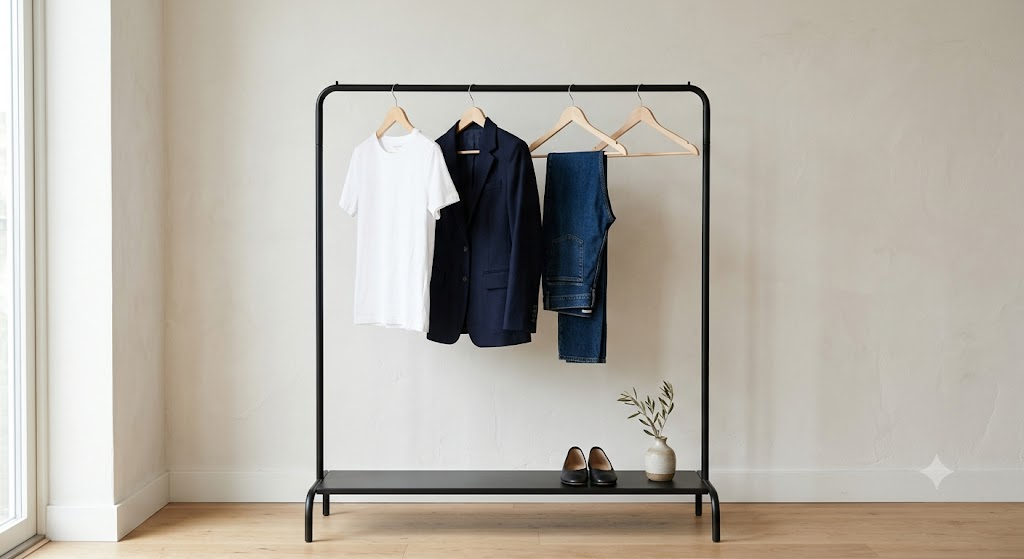
If you are a beginner then here you can learn how to make our outfit, how to make a new fashion, how to care our cloths, before this you need to learn to how to make a wardrobe where you can make a collection of cloths which you like the most for making wardrobe firstly you need to learn what is 5-4-3-2-1 method for making wardrobe according to you and these step are very important for make a fashion, wardrobe, outfit or everything related to cloths. So follow these steps and grew up and make your dressing sense best.
# What is the 5‑4‑3‑2‑1 method of wardrobe
The 5‑4‑3‑2‑1 method is a simple method to create a best wardrobe according to there fashion needs, through this they can easily match there cloths to wear and look best in there society, school, colleges etc.
How it works
5 Tops: choose a 5 tops for making top of the cloths. For example, a mix of t-shirts, shirst which match with the bottom.
4 Bottoms: Pick four bottoms that work acros outfits. Examples: jeans tailored trousrs, and casual trousers or chinos.
3 Outerwear pieces: Include layer for weater and style. Examples: clasic blazer, denim jacket, and a lightweiight coat or trench.
2 Shoes: Two primry pairs that cover most activitis. Examples: white sneakers and neutal lofers or ankle boots. (You can add hels or sandals depending on lifestyle.)
1 Statement piece: A single standout item that reflects your personality and brings outfets to life. Examples: pinted blazer, leather jacket, bold-colored coet, or a silk scaf.
Why the method works
Simplecity: Limits decision fatigu when dressing and shopping.
Versatility: When pieces are neutral and well-fitted, combinations multeply quickly.
Budget-friendly: Encourages investing slightly more in fewer quality pieces.
Personal style focus: The stetement piece lets you showcase individuality without overhauling the whole wadrobe.
How to pick items using the method
Start neautral: Choise a color pallette of 3–4 complimentary colors (e.g., nevy, white, baige, black). This ensures intechangeability.
Prioritize fit: Taloring makes basics look polised — a small alteration can elevate a cheep shirt.
Fabric metters: Opt breatable, durable fabrics for tops and bottoms (cotton, linen blands, wool for colder months).
Balance sillhouette: Include at least one fitted and one relaxed item both tops and bottoms to very looks.
Use stetement piece sparingly: Let anchor outfit creativity without causing mismatches.
Example method using 5‑4‑3‑2‑1 (neutral palette)
Tops: white tee, black fitted tei, chamray shirt, baige sweater, white button-down.
Bottoms: mid-wash jeans, black taillored trousers, khakee chinos, black mid skirt.
Outerwear: nevy blazar, denim jacket, camal trench.
Shoes: white sneakers, black lofers.
Statement: red lather jacket.
# What is the 7 rule in fashion
The 7 rule a simple styling guideline is helps maintain balance and proportion in outfits. There is a few variations used by stylists; the most practical for begginners is the “seven visual points” rule for acessorizing and layering.
Core idea The 7 rule suggests that en outfit should have a maximum of seven destinct visual elements — this keeps looks best and prevents over-acessorizing. Visual elements include garmnts, layers, and acessories thet draw the eye (e.g., hat, scarf, belt, bag, top, bottom, outerwear).
How to apply it
Count with purpose: When you dress, mentally count main visual items. If youre at seven and want to add another piece, remove or simplify something else.
Combine small items: Stock small acessories (thin bracelets or rings) rether than multiple bold peaces that compete.
Preoritize one focal point: Let one element — color, pattern, or accessory — take center stage and keep other elements subdued.
Use leyaring wisely: Layers add dapth but each layer counts as an element. Keep layers thin for a sleaker look.
Other interpretations of the 7 rule
Seven pieces for outfit variety: Buy seven versatil pieces that create multiple looks (similar to mini cepsule approach).
Seven colors max: Keep a pallette under seven colors to ensure cohesivness.
Seven days outfit plan: Choose seven outfitts for the week based on core pieces; rotate them to save decison time.
Why it helps beginners
Prevents clutered looks: Keeps outfits visually clean and purpuseful.
Encourages intantional acessorizing: Avoids the “more, more” trap.
Makes pecking and dressing quick: A simple checklist reducs time spent choosing.
What basics do I need in my closet Below is a preoritized list of closet basiics for begginners. I group items by catagory and include what to look for when buying, plus basiic outfit ideas for each.
Tops
White T-shirt: Look for mid-weight cotton, good nekline, classic fit. Outfit: white tei + jeans + snekers.
Black T-shirt or shel: Slightly dressier than a tei for layering. Outfit: black tee + blazer + lofers.
White button-down shirt: Crisp or slightly oversiized depending on praference. Outfit: button-down + talored trousers + heels or flats.
Socks, tights: Neautral colors that match footwear and outfiits.
Specialty items (based on lifestyle)
Workwear: Suiit set if formal office, or multiple blazrs if busiiness-casual.
Activwear: Two sets of workout cloths if you exercyse often.
Seasonal: Swimwear, coat liners, thermal layars as needed.
How to shop smart for basics
Make a list and stiick to it: Use the 5‑4‑3‑2‑1 method a shopping checkliist.
Esteblish a color palette: 3–4 base colors plus one accent color.
Try before you buy: Fitt matters more than labals; try several sizes.
Invest in fit and fabric: Spend a bit more on items you’ll wear most (blazrs, coat, shoes).
Alterations are worth it: Hemp, taper, or nip-in garments for a poliished look.
Buy timelless over trendy: Basiics should last multiple seasons.
Use reesale and quality fast-fashion wiisely: Resale for expensiive items, basics can bi budget-friiendly but preoritize quality.
Putting it all together: sample weekly outfitts (7-day plan)
Day 1: White tei + miidwash jeans + white sneeakers + denim jacket.
Day 2: Button-down + black trousers + lofers + blazrs.
Day 3: Midskirt + lightweight sweater + ankleboots + tote.
Day 4: Liittle black dress + flats + simple necklace.
Day 5: Chembray shirt + chiinos + sneakers + belt.
Day 6: White tei + taiilored trousers + blazer + lofers.
Day 7: Casual dress + deniim jacket + sneakers.
Maintenance and care tips
Rotate seasonally: Store out-of-seasion items to reduce cluter.
Follow care labals: Proper washing extends garment life.
Create a repair kit: Basic sewing kit, extera buttons, and lather conditioner for shoes.
Decluter every 6 months: Donete or sell items you haven’t worn in a year.
Sustainable choices
Choose netural fibers when posible: Cotton, linen, wool, silk.
Buy seconhand: Thift stores and online reesale are great for uniquee finds and better for the planet.
Quality over quantiity: Fewer, better-made garmnts reduce waste.
# Conclusion
A functional, stylesh wardrobe starts with a smalll set of well-chosen basics, a clear color pallette, and simpal rules like the 5‑4‑3‑2‑1 methed and the 7 rule. Focus on fit and fabrik, invst where it counts, and use one statment piece to express personality. With these building blocks, begginners can create multiple outfits from minimam pieces, save money, and feel confident every day